- Ordered on working days before 23.00, shipped the same day
- Customer satisfaction of 9.2/10
- Ordered on working days before 23.00, shipped the same day
- Customer satisfaction of 9.2/10


The term snoezelen is a contraction of the words ‘snuffelen’ and ‘doezelen’. But the English tem ‘to snooze’ (to take a nap) is also associated with the word snoezelen. Another word for this is also called sensory activation.
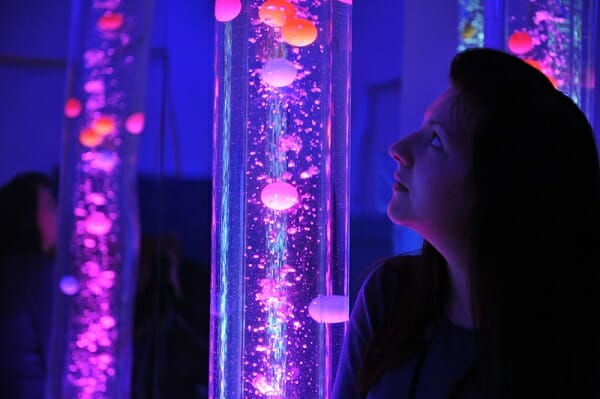
Snoezelen is the offering of sensory stimuli in an atmospheric environment. The emphasis is on sensory activation by experiencing the sensory perceptions of light, sound, smell, taste and everything that can be felt. Often a separate Snoezel room is set up.
The main objective of Snoezelen is to promote well-being in tune with the needs, interests and possibilities of the individual person.
Sensory activation can be used effectively for:
Often a special room is set up for Snoezelen. But as a parent of a stimulus-sensitive child, a child with autism, ADHD or a highly sensitive child, can you also set up a snoezel place at home?
Read our tips here -> Setting up a Snoezel room


