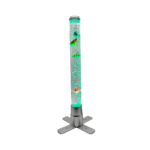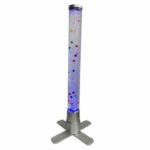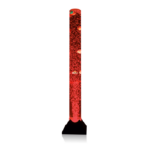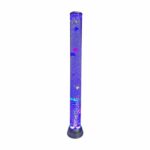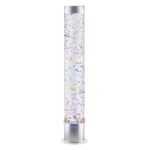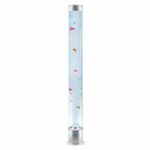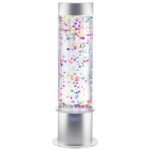



A child who is overwhelmed by stimuli often does not need words for rest. What it needs is a resting point: looking at something that moves, that gives light without sparkle, and has a rhythm that you don’t have to understand to become silent. Bubble tubes (also called snoezel lamp or bubble lamp) give children exactly that resting point: water that slowly bubbles up, light that changes color softly, a reassuring repetition that can calm the nervous system.
Bubble tubes are therefore not intended as decoration. They are sensory aids that can have a calming effect on many children with autism, ADHD or stimulus processing problems, although the result varies from child to child. The range is large and the differences between models are substantial. At Educadora webshop, a frequently asked question is: which bubble tube best suits our situation? This article will give you a clear answer.
A sensory bubble tube works on multiple senses at once, but in a low, predictable way. Visually, it offers moving light and rising bubbles. Aurally it gives an even noise (because of the engine). When touched, the child feels a slight vibration in the tube. That combination of controlled stimulation is exactly what makes destimulation possible: the nervous system has to process something that does not overwhelm, and can therefore relax. This principle is central to Snoezelen, the guidance approach that has been specially developed for people with stimulus processing problems.
Children with autism can benefit from the visual predictability: the bubbles always rise in the same way, there are no surprises. Children with ADHD find in the tube a calming focal point that attracts their attention without stimulating. Children with general stimulus processing problems use it as an aid to self-regulation, at home as a permanent de-stimulation place, in the classroom as a quiet corner, or in the therapy room as part of a broader Snoezelen environment.
Whichever target group starts working with a bubble tube: effect differs per child, and coordination with a supervisor or therapist is still recommended. What the tube is not: a replacement for guidance. It is a tool, and works best when it is used consciously.
The table-top bubble tube is the most compact version, usually between 60 and 90 centimeters high. It stands on a worktop or table, is easy to move and requires little space. This type is a logical choice for home use or as a first introduction to Snoezelen material. The water content is limited, maintenance is easy and the purchase price is the lowest of the three. But it does require direct supervision, because you cannot confirm it permanently.
The bubble lamp with wall mounting is placed right in front of the wall and thus saves floor space. This makes the type particularly suitable for classrooms and smaller therapy rooms. The wall mount also provides extra stability, which is not an unnecessary luxury in an environment with children. A water column with LED lighting that is attached to the wall, with a bracket, usually offers more visual volume than a table model.
The freestanding Snoezel tube (often placed in a wider unit) and has a height of at least 145 centimeters or larger is the professional variant. This format offers the most visual effect. Healthcare institutions and therapeutic snoozing rooms almost always choose this type, because of the imposing presence, the sturdy mounting options and the professional operation. Please note: not every large freestanding pipe is a water pipe. The dry type, which works with moving flowers or balls in the tube without water, has a different maintenance profile and a different stimulus effect.
As a practical guideline for the height, based on common sizes, 60 to 90 centimeters is often suitable for toddlers and preschoolers in practice. But this table model cannot be fixed (so supervise). The bubble lamp with a height of 100 to 120 centimeters is suitable for older children and smaller spaces. Check the description to see if wall mounting is included (if not, buy it yourself) so that the bubble tube is stable and safe. The dimensions from 145 to 200 centimeters for professional snoezel rooms. Always measure the space in advance and take into account the foot size for freestanding models. The diameter, typically 10 to 15 centimeters in consumer models and up to 20 centimeters in large professional versions, determines the visual volume.
LED lighting is not a marketing language if you know what you are looking for. For Snoezel use, an RGB system with an automatic, gradual color transition is the most effective. Rapidly flashing light effects or bright changes are counterproductive for stimulus-sensitive children. Always ask if the color change is adjustable and if a fixed color can be chosen, because for some children a calm, unchanging color is more pleasant than an automatic transition. Most Educadora tubes contain a remote control where the colors are adjustable.
The pump’s noise level is a specification that many buyers overlook. A value of approximately 40 dB is usually considered acceptable for a bedroom or therapy room, measured at a short distance from the device. In practice we know that the engine does produce some noise, this is monotonous, but is still experienced disturbing by some children. Our experience is that a bubble lamp is also not a tool to use in a bedroom to relax before going to sleep. Then it is better to choose a projection lamp (they hardly produce any noise).
The water capacity varies from approximately 6 litres for compact models to 20 litres for large professional pipes. More water means more weight, longer filling time and more extensive maintenance. A remote control or timer is highly recommended in a classroom or therapy room: the attendant can operate the tube without disturbing the sensory environment. Also check that the power supply is via an insulated low-voltage adapter, usually internal 12 Volts, and that the base is stable enough for use by children.
The range of bubble tubes will clearly fall into three segments in 2026. In the budget segment, from around 80 to 150 euros, you will find compact models from 60 to 130 centimetres, suitable for home and occasional use. The middle class runs from around 150 to 400 euros and offers 90 to 120 centimetres in height, colour change lighting, often decorative fish and a remote control, suitable for regular use at home or in a small therapy room. The professional category, from around 400 to 1,485 euros, includes Snoezel tubes from 145 to 200 centimetres for therapy rooms and care facilities, with wall mounting, sturdy base and extensive controls. Educadora can supply the latter category of Snoezel tubes on request, but it is not standard in the range.
Maintenance is the part that is most often forgotten when buying, and it directly determines its service life. Replace the water as soon as it becomes cloudy. Use demineralized water to prevent limescale, as limescale in the pump and hoses is the most common cause of premature wear. Clean the tube thoroughly before refilling. Check hoses and pump connections at least once a year for wear and leaks. An anti-limescale treatment significantly extends the lifespan. A well-maintained bubble tube will last for years.
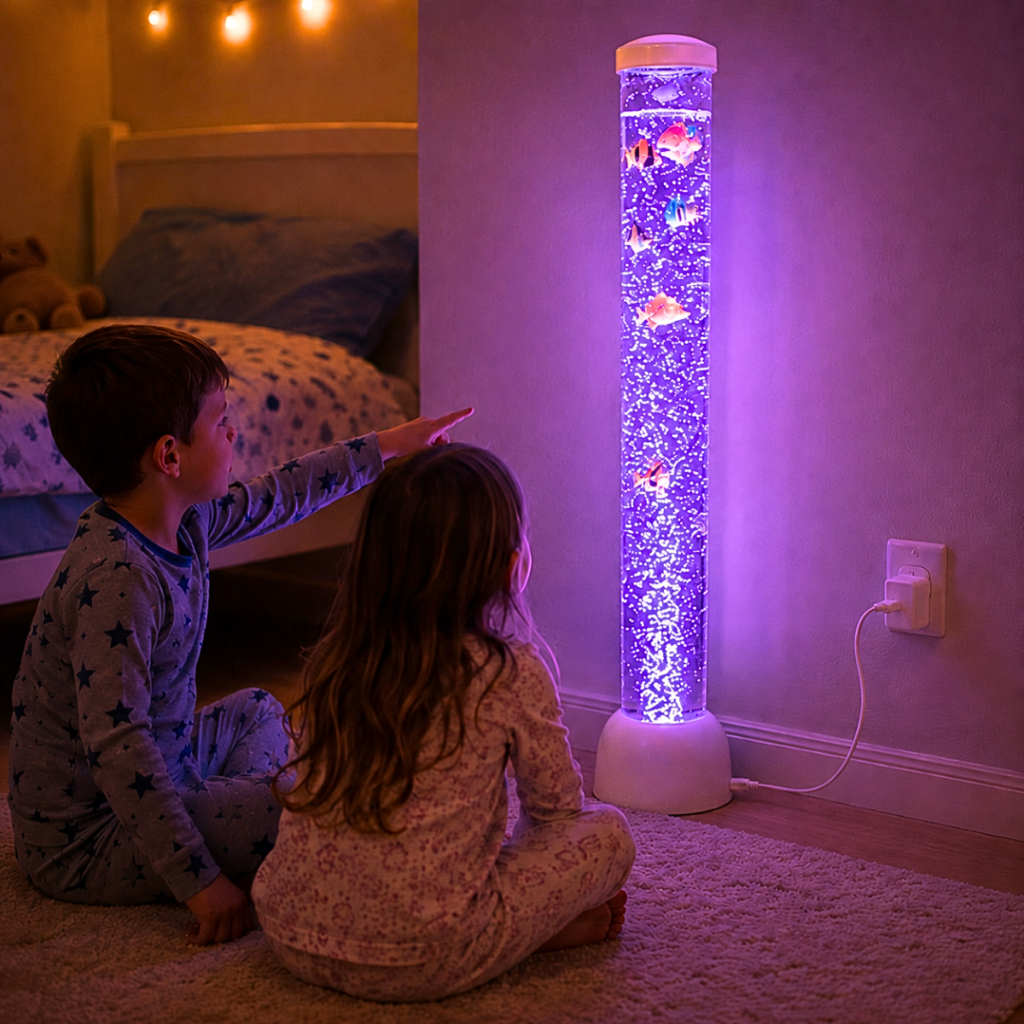
At home, a Snoezel tube works best in a quiet, fixed corner, far from walking zones. A fixed place is important: the child gets to know the ritual and the tube becomes part of a recognizable routine. Many parents and supervisors use the tube before bedtime, after school when overstimulated, or as a regular part of daily de-stimulation moments. But I wouldn’t use it when literally falling asleep because the pump does produce noise anyway. Test what works best for your child and, if possible, coordinate this with an occupational therapist or supervisor. Young children should never use the tube unattended. Cables must be neatly concealed and out of reach.
In a classroom, a bubble unit in a quiet corner or a separate Snoezelen room is a visual anchor point for students who need to relax for a while. Healthcare facilities are subject to higher requirements: wall mounting or floor anchoring is highly recommended and is often required according to the institution’s internal risk analysis. Remote control is essential so that the attendant controls the environment.
Before you buy a bubble tube, it pays to ask yourself the following questions:
Educadora is a specialized webshop in sensory aids, founded by Suzanne, she has years of experience as a remedial educationalist in the guidance of children with stimulus processing problems. The Snoezel range includes carefully curated models: from compact tabletop models for the home to more professional Snoezel tubes for schools (larger models available on request). Each product has been selected for safety, quality and practicality.
As a professional or parent, are you not immediately sure which model best suits your situation? View the range on the website and feel free to contact us by email for personal advice.
A good choice starts with three questions: which type of bubble tube suits the space and the target group, which technical specifications determine comfort and safety, and how much maintenance can realistically be maintained? A bubble tube that is in the wrong place, is too loud or is never cleaned does not provide the sensory moment of rest you are looking for.
Bubble tubes show their full value when they are consciously used as part of a sensory rest, not as a separate purchase in a busy space. For parents, teachers, and therapists who know what they’re looking for, it’s worth the investment. For those who are not quite sure yet: at Educadora expert advice is available for you.