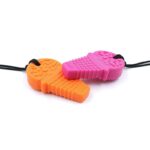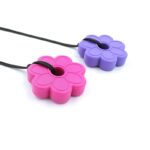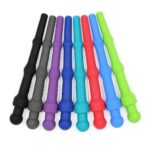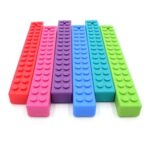



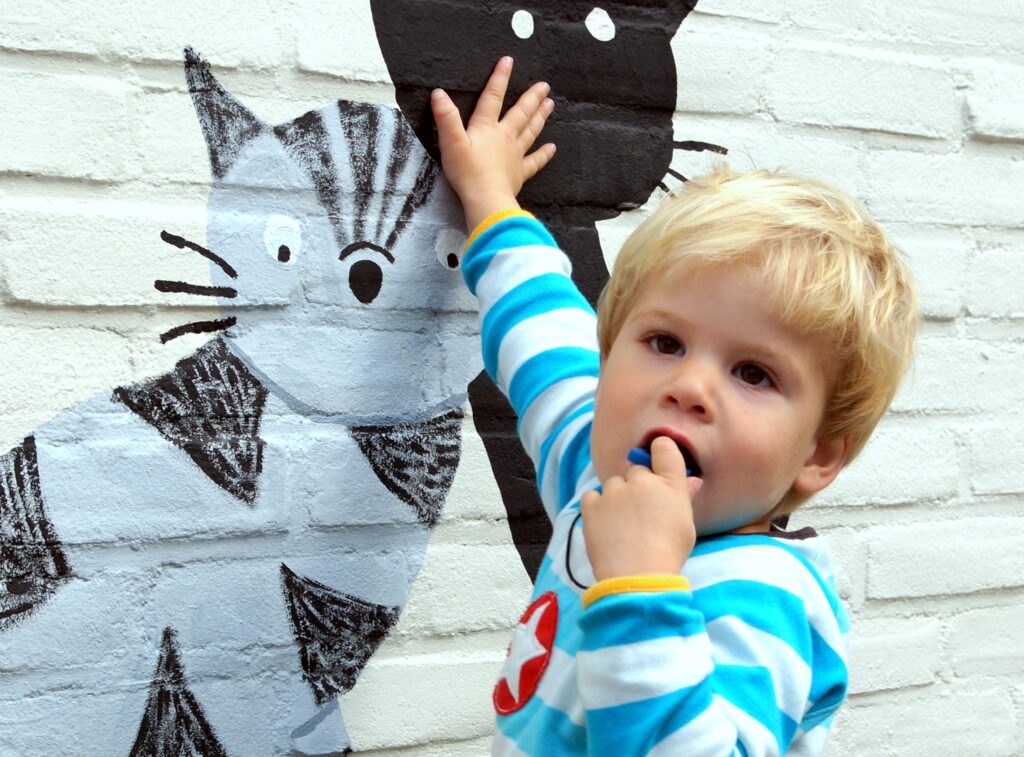
Your toddler chews on his sleeve during breakfast, nibbles on the toys in the sandbox and has already grabbed the cord of his coat several times. You are looking for a safe alternative and soon come across the term bite chain for toddlers. A teething chain for your toddler can be a safe and targeted alternative when your child chews on clothes, toys, or furniture.
At Educadora, we see every day what questions parents have about the use of teething chains or teething toys for young children. Which material is safe? Which hardness suits my child? And when is such a chain actually useful? In this article you will find all the information you need to make a good choice.
After this article, you’ll know which material is safe, what hardness suits your child’s chewing pattern, what safety features to check, and what five options we recommend for a variety of chewing needs.
Chewing may feel like a harmless habit, but for many toddlers, there is more to it. When a child chews, the temporomandibular joint receives firm pressure, also known as proprioceptive input. This deep pressure has a calming effect on the nervous system and helps the child to regulate itself. For toddlers who have difficulty processing stimuli, such as children with autism, ADHD or sensory sensitivity, chewing is therefore an active strategy to keep themselves in balance.
Chewing behavior is also normal in the toddler phase. Many children suck or chew as part of their oral development. But some children continue to exhibit this behavior longer and more intensively, especially in busy or challenging situations. A toddler who starts chewing on his shirt just before a noisy birthday sends a clear signal: the nervous system needs extra support.
The problem is that children chew on materials that are not designed for this purpose: toys, furniture, pencils or clothing cords. These pose real risks, such as toxic paint, sharp edges or small parts that come loose. A chewing chain for toddlers then offers a safe and targeted alternative that provides exactly the sensory input the child is looking for.
Not all bite chains are the same. The material largely determines how safe, durable and pleasant the chain is in practice. The three common options are food-grade silicone, beech wood and TPE or natural rubber.
Food-grade silicone is the most commonly used material for toddler chew jewelry. It is free of BPA, phthalates and PVC, flexible and easy to clean. Most children accept it quickly because it feels soft.
Beech wood is a sturdy, natural alternative that is pleasant for toddlers who prefer to chew something hard. For wooden products, always look for a smooth finish without cracks or splinters, and only choose models without paint, varnish or other coatings.
TPE and natural rubber are soft and flexible, a good choice for children with sensitive jaws. In the case of rubber, always check whether the product is latex-free.
You choose the hardness based on your child’s chewing pattern:
A practical rule of thumb: start with a bite chain for medium chewing needs. If the product breaks down quickly (within 1 month), switch to firm.
Before you buy a bite chain, it is smart to read the product specifications carefully. Not every product that claims “safe for children” has also been demonstrably tested. When it comes to quality marks, pay attention to the EN 71 standards: EN 71-1 deals with mechanical and physical safety, EN 71-2 with flammability and EN 71-3 deals with the migration of harmful substances. The latter is most relevant for a chewing product, because it is active in the mouth. Products that meet REACH requirements have also been tested for chemicals of concern. Please note: the CE marking is not an independent quality mark but a declaration of conformity from the manufacturer itself. When in doubt, always ask for independent test reports from an approved test laboratory.
The construction and dimensions are at least as important as the quality mark. For a toddler, a chain length of 32 to 35 centimeters is common. The chain should not pinch but also not be long enough to pull over the head. The clasp should always be a break clip or safety clip that yields when the chain is pulled and then breaks open. A teething device for toddlers without a safety clip poses a real risk of strangulation or choking. The chewing part itself must be cast as a whole.
The Educadora range has been put together based on years of experience with stimulus-sensitive children. Below you will find five options, ranked by chewing need.
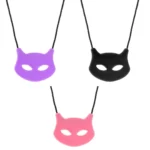
A soft silicone chain with a simple pendant is ideal for toddlers who are suckers or chew softly and briefly. The material feels pleasant in the mouth, is lightweight and provides little resistance. This is the right choice for children who are just getting acquainted with a teething toy for toddlers and have yet to discover if it helps them. Think of the Chewigem Cat or the Chewigem Skull.
This is the most popular option in the Educadora range for toddlers. A food-safe silicone chain with medium hardness, available in neutral and cheerful colors, is suitable for most toddlers with regular chewing behavior. It offers just a little more resistance than a soft chain without feeling too heavy. Think for example of the Chewigem Realm Ring or the Chewigem Miller Heart.
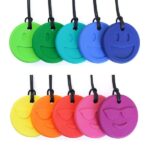
A sturdy bite chain is designed for intensive use. The material lasts longer, does not deform when bitten hard and offers the resistance that strong chewers need. Not sure if your child needs a sturdy necklace? Please contact Educadora; Suzanne, the remedial educationalist (owner) can advise you. Think, for example, of the super star from Ark Therapeutic or the Smiley from Ark Therapeutic and then choose the firmest variant.
Smoothly finished beech wood has a different texture than silicone and appeals better to some stimulus-sensitive toddlers. Always choose a product that is free of paint, varnish or other coatings. Check the chain regularly for wear and tears, as wood can crack over time with intensive use. Educadora does not have this in its range.
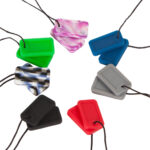
A low-profile model that attaches to a zipper or collar is ideal for a group setting. The child can chew discreetly without distracting classmates, and the chain is always within reach without additional actions. Educadora also provides advice for schools and therapy practices, with tailor-made advice for teachers and professionals. Think for example of the Toggle board or the Chewy fidget.
At home, you offer the bite chain as an alternative when your child chews on clothes or toys. Do not use the chain as a toy for throwing or swinging: the cord and the closure are not intended for that. In the classroom, a discreet model is the most practical. A chain that hangs from the zipper or collar is immediately available without any additional actions from the teacher. In a therapy setting, the occupational therapist or remedial educationalist determines together with you which type is most suitable.
Keeping it clean is a simple daily routine. Rinse the chain under lukewarm water with a small amount of mild soap, then rinse well so that no soap residue remains and let the chain air dry before use. Do not use boiling water or harsh detergents unless the manufacturer expressly allows it. Always read the supplied instructions carefully, as regulations vary by product.
There is no set lifespan for a chewing chain. Replace the chain as soon as you see cracks, wear or permanent deformation. Visually inspect the product after each use: this is the only reliable way to know if the chain is still safe.
A chewing chain solves the immediate chewing need, but is not a solution to all underlying problems. Certain behavioral signals require more than one piece of chewing jewelry. If your child bites aggressively at people, cannot stop chewing despite using the chain, or reacts extremely anxiously when you remove the chewing object, this may indicate a deeper sensory processing problem. In that case, it is wise to call in a remedial educationalist or occupational therapist for a targeted assessment.
Two practical experiences show how diverse the difference can be. A mother of a toddler with autism described how her child left his sleeves alone as soon as he wore a sturdy silicone bite chain. A kindergarten teacher noticed that a discreet chewing chain made the transitions in the day calmer for a stimulus-sensitive girl in her group. Every child is different, and the right choice depends on your toddler’s specific chewing behavior and sensory needs.
If you don’t know where to start, Suzanne from Educadora is ready for free advice. Send an email describing your child’s chewing behavior and you will receive advice.
Choosing a good bite chain for your toddler starts with understanding why your child is chewing. Then you choose the right material, the appropriate hardness and a product that meets the EN 71 standards, REACH requirements and construction requirements for secure closures and dimensions. This is not a complicated process if you know what to look for.
At Educadora you will find a specialized range for toddlers with different chewing needs: from soft silicone chewing chains for light chewers to sturdy teething jewelry for intensive chewers, from cheerful models to discreet variants for school and therapy. All products are selected for material safety and practicality.
View the range of bite chains on the Educadora webshop. Are you unsure about the right choice? Ask for free advice on the best teething chain toddler for your child.