



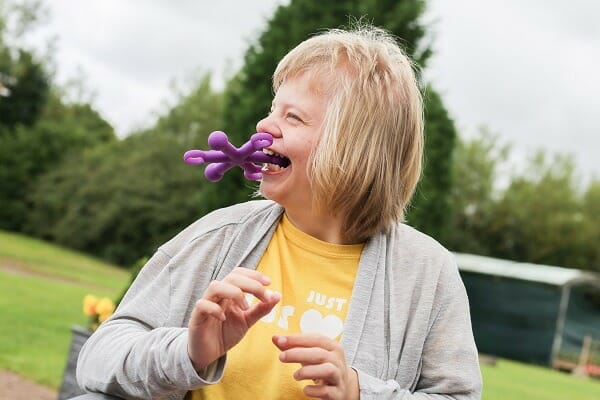
Children and adults with intellectual disabilities often put things in their mouths that can be dangerous or that do not serve purpose. To meet the need for oral stimuli, a bite chain with extra texture can be a solution. But where does the chewing need come from and what are useful tips?
Chewing in people with intellectual disabilities can be a way to discover the world. Because of the mental retardation, the need to discover the world orally can therefore last longer than the third year of life. After all, this is one of the first stages in development and some people with disabilities will be stuck in this phase for their entire lives.
Chewing is also a way to prevent overstimulation or to become more active when understimulated. Some people with an intellectual disability still suck their thumbs or bite their nails at high tension. This helps them to regulate stimuli. But it’s not hygienic. It is precisely this chewing that can sometimes be remedied by the use of safe bite toys, a chewing chain or chew bracelet.
Sometimes we see that people with intellectual disabilities communicate by chewing to express emotions (for example frustration), sometimes you can tell from aggressive chewing behavior whether the person with an intellectual disability feels good or not at all!
Some individuals with intellectual disabilities chew because they have low oral awareness. In that case, vibrations, but also different textures in the mouth area can help the mouth wake up.
The z-vibe is then recommended for extra stimulation in the mouth area. But you can also provide extra sensory stimuli by providing chewing materials with texture, such as the Hexichew, the skull bite chain or, for example, the brick stick chewing chain.

As I described in this article, you can often tell from the person with an intellectual disability whether the person chews hard because he or she is anxious or angry, or wants to make other emotions clear to the environment!
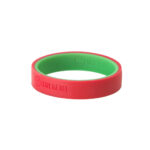
The Chewigem emotion bracelet can help when, for example, the person with an intellectual disability finds it difficult to express or make clear emotions. With this bracelet, the person with the green side can indicate ‘I feel good’ and with the red side ‘leave me alone for a while’.
Available in version for children (size similar to the Tread bracelet). Available in version for adults (size similar to the Bubba bracelet). With this chewing bracelet, a stimulus-sensitive person or person with an intellectual disability can more easily indicate how he / she feels and the environment can perceive this and take this into account. Despite the English inscription, certainly suitable, as the smileys indicate the emotion.
The Chewimoji from Chewigem is a bite toy for children and adults with chewing needs. The clouds of emotions support people with intellectual disabilities in learning to understand and recognize emotions in themselves and others. In addition to a beautiful chewing product, this is a very practical communication tool.
The set of chewigem chewing products consists of no less than 4 clouds that represent a total of 8 feelings with our own faces. The following emotions are displayed: angry, happy, satisfied, tired, sad, exciting, scared and bored. You can attach this bite toy with the toy strap to a bag or pouch. But this set can also be safely taken to bed.
Unfortunately, it does not work that when you hand over a bite chain or chewing product, it is immediately bitten. Often the person has already developed a habit of chewing nails or clothes. This automatism is not easy to break. It therefore requires a lot of patience from supervisors to trace the ‘old’ chewing behavior to chewing on a bite chain. Make sure that those involved are aware of the use and usefulness of a chewing jewelry and that the same way is done to let the new habit wear off.
Shop our chewing products
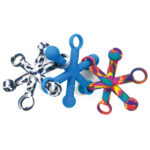

The Chewigem bite toys are a safe alternative for people with an intellectual disability with chewing needs. Chewigem’s range of bite toys consists of a remote control and a mobile phone. These chewing products are also suitable as a replacement for a chewing jewelry in bed and for people with intellectual disabilities who do not want to wear a necklace.
Chewigem’s hexichew is a unique chewing product! The hexichew is suitable for average chewing needs. The hexichew chewing products are suitable for children and adults who also like to fidget. The nice thing about the Hexichew is that if you buy several you can link them together by placing the spheres through the round openings.
But even with 1 copy you can get enough fidgeting and what is so nice, it is chew-resistant! In short, a unique chewing product from Chewigem that meets movement restlessness.
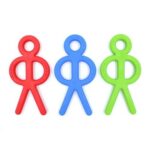
ARK’s Buddy Bite is a nicely designed bite toy. The figure is easy to hold and suitable for young and old with chewing needs. This bite toy is long enough to be used by children with passing molars or children or adults who like to chew with the molars. Because of the rings at the arms, chewing can be done on both sides in the mouth area. In short, a nice looking bite figure suitable for various target groups. Also useful for in bed, or to attach to a wheelchair.
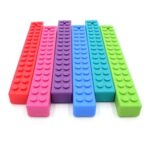
The MEGA Brick Stick from ARK is very similar to ark’s original and popular Brick Stick chewing chain. The Mega brick chewing stone is about 12 cm long, 1.5 cm wide and 1.2 cm thick. The MEGA Brick Stick by ARK is a chewable product and doesn’t come on a cord, but it does have a hole on one end in case you want to add a cord to it.
ARK’s Z-Vibe is a vibrating oral motor tool for speech therapy, nutritional therapy and numerous other applications. It is recommended by speech therapists and occupational therapists and is used to provide oral stimulation and tactile signals.
Use the Z-vibe to provide tactile stimulation and sensory feedback to the lips, tongue, gums, cheeks and jaw. They can also be used outside the mouth on the arms, hands, etc. For oral defenses and sensitivities, start with the smooth tips and move on to the textured tips. For oral motor exercises, the Probe Tips is a versatile option.
Popular chew jewelry and bite toys
You may also like these articles
Do you find this article fascinating?
