



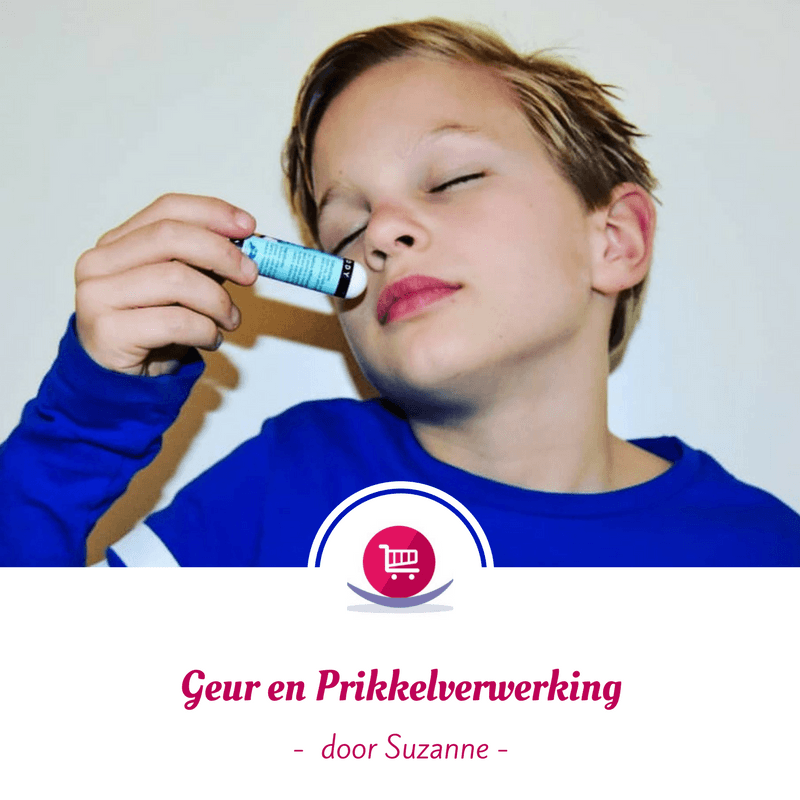
Scents are an important part of our daily lives. A nice smell can remind us of pleasant memories or make us crave certain foods. A foul or unpleasant odor causes us to keep the nose closed or leave.
Our sense of smell is closely linked to our taste. Smells and taste can influence our memories, emotions and behavior. For children with sensory processing problems, smells are a constant source of anxiety. Having sensory problems often means that the olfactory system reacts too quickly. This means that many scents are experienced overwhelmingly.
And imagine how terrible that ‘foul’ smell must be for a child whose smell is ten times stronger than yours! Children with sensitive olfactory systems experience the smells more intensely. Because of this, the emotional associations when experiencing different scents can also be more intense.
A child who is hypersensitive to smells is quickly overwhelmed by various smells. Other children and teachers often do not notice these smells that are disturbing for your child (who is sensitive). One of the most common complaints is a child who cannot concentrate on his schoolwork, because the smell of, for example, a cleaning solution or the teacher’s perfume comes in too hard.
Another problem that sensory children may face is the smell of wet clothes (when children come out of the playground). Some children with smell disorders are extremely bothered by this smell and it is exacerbated if the school is not well ventilated.
The sense of smell is complex. Small nerve fibers are located in the nose, these detect odor molecules that are in the air. These fibers send this sensory information to the olfactory bulb, which then forwards the messages to the brain. The fascinating thing about this feeling is that it is a direct feeling.
Of course, everyone has a few smells that bother them. I just can’t stand the smell of perfume when it is very present or the smell of cigarette smoke (I can smell it from a good distance). However, being sensitive to a certain smell is different from sensory processing problems and olfactory sensitivities.
The newborn is guided by smell. Barely born, the baby placed on her mother’s chest will move toward the breast to eat. Researchers have also found that a newborn can recognize the difference between their mother’s smell and other women.
The child’s olfactory system is able to distinguish between smells that are important and those that they should ignore. Some odors, such as smoke, must be noticed immediately.
Because we know how important smell is for children and their ability to learn, it is important to recognize the signs. So how can we recognize a child who struggles with an over- or undersensitivity to odor stimuli?
What can you do if your child is hypersensitive or undersensitive to smell stimuli?
Here are a few fun games you can play with your child to make sure they get the right amount of sensory input.
Guess the smell (when your child is hypersensitive to smell): If your child has trouble identifying smells, try soaking a few cotton balls in different essential oils. Let your child smell each cotton ball and try to guess what the smell is. You can also use scented candles or foods to perform a “blind smell test.” Or use aromatheraputty or a bath with Scented Bath Bombs.
Recognize your child’s emotions (when your child is sensitive to smell): Your child may have a strong negative reaction when someone eats a certain food near them. When this happens, acknowledge your child’s emotional response and work together to teach your child to step out of the situation when a smell is overwhelming.
Desensitization (when your child is sensitive to smell): it is possible to make your child less sensitive to certain smells. This can be done by exposing the scent to your child in small steps. However, keep in mind that some smells can evoke strong emotional reactions in your child; Make sure you recognize your child’s boundaries and stop the exercise if it seems to be overwhelming or too difficult for your child.
Which smells does your child react very strongly to? Share it with us.