



The popularity of a Snoezelen room in institutions and ‘special’ schools is increasing. Therapists also often offer children a range of sensory stimuli. These help to calm and stimulate the body.
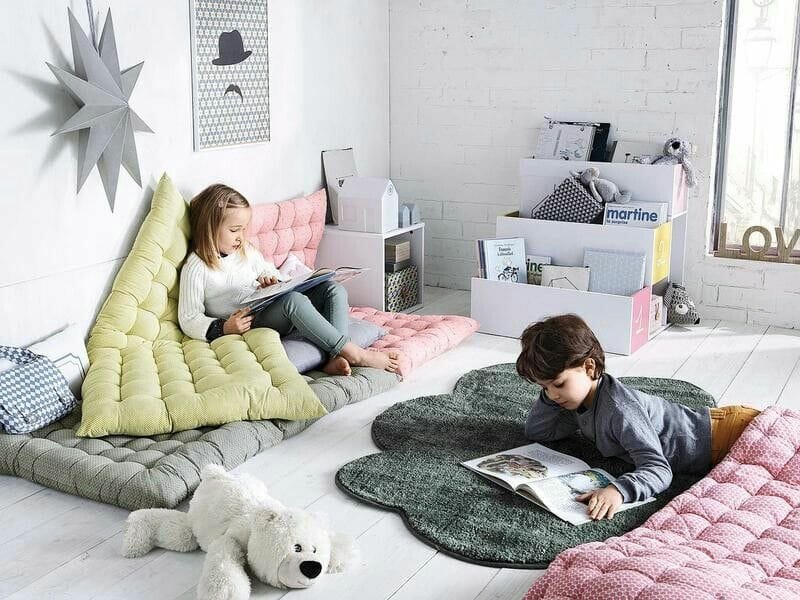
But that doesn’t mean that you can’t create a snoezelen place for your child in your own home. Don’t worry about not having a separate room for this, part of a room can be just as effective in providing sensory stimuli.
Furthermore, there are plenty of (affordable) materials and products available that help your child regulate and de-stress themselves, but also provide the necessary sensory stimuli if necessary.
Snoezelen is an activity suitable for all children and adults. However, because we all have different sensory needs, the Snoezel room must contain a variety of activities and stimuli.
The goal is that you, as a parent, look for activities that can help your child regulate tensions.
For some children, the Snoezel place is a space to relax when overstimulated and to unwind after an ‘outburst of anger’. These children experience panic or stress more quickly due to the multitude of stimuli around them. In a Snoezel room, they can relax when they are no longer in control of themselves. The visual, tactile and movement stimuli can help them calm down.
Another group of children needs more sensory stimuli. They are actively looking to move hard, chew on materials, and much more.
And of course, and this is the largest group, there are children who have mixed sensory needs. For example, they can be stimulus seekers in certain sensory areas and stimulus-avoidant with regard to other sensory information.
Here I discuss some great ideas for a sensory space:
You can offer your child exercise by bouncing on a large gym ball, by rocking in a rocking chair, moving in the snuggle huggle or jumping on a mini trampoline.
You can add atmospheric lighting to the room by using string lights, projector lighting or lava lamps. Lighting is very powerful. It affects us in subtle ways and can change the way we feel. Warm and soft light can make us feel relaxed. You can even consider a light table in the Snoezelen room. Or how about this interactive floor tile!
Offer a variety of tactile and sensory products.
I would recommend dividing the Sensory products (sensory toys) into 3-5 pieces in small bins. If there are too many things lying around, the excess of stimuli can overstimulate your child, and then your child becomes uninterested. Alternate the sensory bins , and keep the unused toy bins out of sight. This way, your child will be less likely to get bored (or overstimulated). Fill the bins with fidget toys such as Fidget worm, Infinity cube, drop hourglass, but also use chew jewelry if your child has chewing needs such as the hand fidget
Create a kind of barefoot path in the house or a Plofmatras. A very simple DIY solution for the latter is to take a large duvet cover with a zipper and stuff it with pillows, blankets, large stuffed animals, animals, etc. Zip it up and let your child jump. (Also check out this mega beanbag, which is also resistant to crashing) For a barefoot path, the tactile circles are recommended.
You can simply take some essential oils , put it on a cotton ball, and let the child smell. Kneading with scented clay is also a way to incorporate some “aromatherapy” into your sensory space! Lavender scent soothes and helps with relaxation.
A cost-effective option for building a private place for deep pressure is to use a play tent and fill it with blankets and lots of stuffed animals. To provide targeted deep pressure , the weighted snake or lizard is suitable.
You can create your own textured wall or plate with various household items. Use CDs (smooth, shiny side up), scouring pads, cotton balls. Products that are tactile and visually stimulating.
Instead of an expensive massage mat, a simple massager can provide your child with vibration sensations. Offering vibrating massage can make your child with a low arousal level (lower alertness) extra alert. Vibration gives your child that extra sensory information to “awaken” his muscles. It can be very therapeutic and calming for your stimulus-seeking child. You can rub the Senseez massage cuddly toy up and down on your child’s back, arms and legs. If your child doesn’t like the sensation of the vibration, never force it.
Simply play some songs on your phone as background noise in the sensory space. Music can change the way we feel. Songs with a steady beat have a calming effect and are effective in reducing anxiety. Nature sounds and sounds of rain, light jazz, classical and easy-listening music are also very calming. Our vibrating musical hedgehog is a convenient option.
Provide a nice soft surface by, for example, a nice carpet and cushions and a nice beanbag.
I wish you good luck with creating a snoezelen place for your child in the house. As you introduce different products and activities, you’ll learn more about what your child’s sensory preferences are. Observe your child, what does your child tend towards, what does your child enjoy. Often it is a matter of trial and error and pure exploration to see what helps the child regulate itself.
If you have any tips, let us know in a comment.