



Sufficient exercise and good sleep have a positive effect on concentration, mood, executive functions and self-regulation in children with ADHD.
A long-term exercise program, at any age, causes significant changes throughout the body (some of which are obvious, such as heart and muscle genes) and also in the brain. Recent research shows that a lot of exercise can cause the brain to grow and become more efficient.
And even better, exercise has a positive effect on the specific brain areas that children with ADHD experience a lot of discomfort in, namely the hippocampus, basal ganglia and the frontal cortex, all of which are essential for the degree of self-regulation (controlling yourself) and executive functioning (such as planning and organizing, keeping an overview).
For children with ADHD (but especially for their parents), the school career and especially achieving good school results is often a problem. It can be cautiously concluded that recent studies show that more exercise can lead to an improvement in school performance in children.
Sports such as fitness are associated with an improvement in working memory, inhibition control (impulse control) and learning outcomes in children. In other words, if you want to help your child, make sure there is enough exercise and sports in your child’s program. Exercise benefits the attention and executive functioning of your child with ADHD.
For many families, expanding daily physical activity for kids is a challenge, depending on the climate, weather, cost, and neighborhood. Here are some solutions :
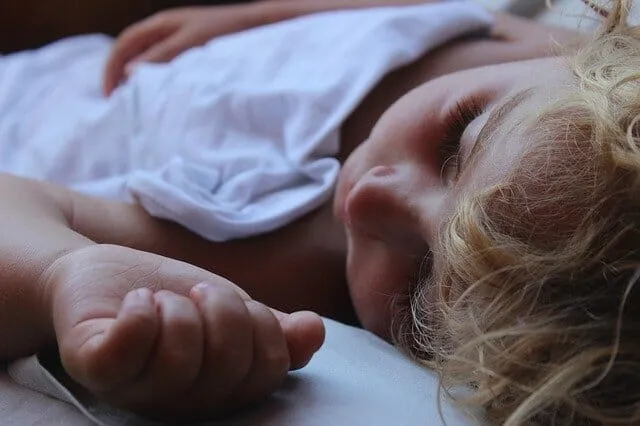
Sleep is perhaps the most important tool that nature uses to grow a child’s brain. During sleep, the brain makes new connections, stores memories, and repairs cells. One notable scientific finding is called sleep-dependent learning, which means that a person consolidates learning while they sleep.
You’ve probably heard someone say that children with ADHD seem to learn something one day, but have to learn it again the next day. This is an example of failed memory consolidation. It’s a fact that children can’t learn things when they’re not sleeping. Sleep is also crucial for learning to manage stress and emotions and developing focused attention.
Sleep scientists don’t see sleep as just useful in learning; they see it as necessary. In fact, some recent research suggests that children who sleep more have higher IQs, as well as better attention and self-control – all relevant to the child with ADHD.
Read tips to help your child sleep better here
We don’t need research to tell us that we can’t concentrate properly without getting enough sleep. But science adds an important detail. A focus problem can be transmitted even after sleep is restored. You probably recognize it after a sleepless night. You can’t handle stress, deal with your emotions, or focus. [read more about stimulus processing and behavior]. In short, if your child doesn’t get enough sleep, her attention and behavior patterns are very similar to ADHD. And what if your child actually has ADHD?
Sleep is active, not passive. It is an essential part of brain wiring and learning. Children with ADHD usually have delays or loss of brain development, as well as problems with learning, so maintaining or restoring a healthy sleep routine is important.
A lack of sleep can produce symptoms similar to ADHD because sleep is necessary to maintain the mental capacity needed for self-regulation. Before you start treating the ADHD symptoms, it is wise to first work on the sleep problem.
Children with ADHD often have sleep-related behavioral problems that can interfere with good sleep.
If you know that your child isn’t getting enough sleep and is therefore showing the negative effects of too little sleep, you should try to solve the problem. Many children have negative thoughts about going to bed or going to sleep. So a key concept is to replace those negative thoughts with positive ones.