



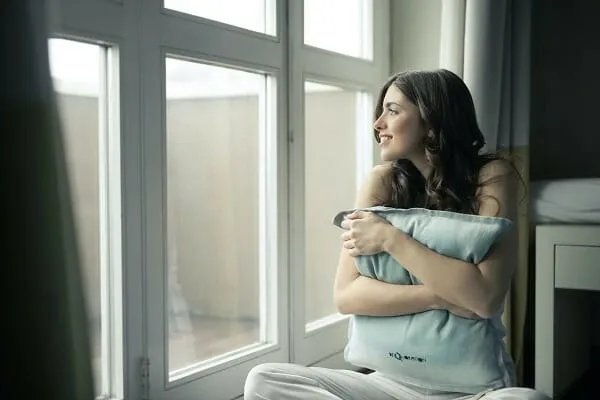
In this article I pay attention to autism in women. Precisely because autism is often misunderstood in girls and women, but also because autism is expressed differently in them.
What you will read in this article will be about:
The biggest differences between men and women with autism are:
Women with autism often express their feelings differently than men with autism.
As already mentioned, we see that girls with autism often copy emotions or behavior (for example in school or other places) they almost literally walk on the tips of their toes and then come home to their familiar environment and then everything explodes! Often women only burst out at home and can only then “catch their breath”.
Copying feelings and behavior does not mean that they always know what they feel or their feelings are paralyzed by copying or camouflaging so much. It eats up a lot of energy. Often women feel more intuitive, they feel others well. Only putting yourself in the other person’s shoes is often a pitfall! For example, it is difficult for them to respond adequately to emotions. And tuning in to a partner is sometimes difficult too. After all, you have to adapt to each other even more than otherwise.
But this does not mean that people with autism always want to be alone and do not need social contact. On the contrary, people with autism make every effort to fit in! You see that women or girls with autism are the most flexible in this. They want to be like everyone else but don’t know how to express these emotions well. There is no unwillingness but powerlessness!

Girls or women with autism often get wrong diagnoses. This is because they are often very good at hiding (camouflaging) their shortcomings or difficulties from the outside world. They quickly feel excluded or they feel that they are different from others.
Many girls with autism often walk on the tips of their toes for a large part of their adult lives, in order to appear as normal as possible. It is precisely by trying so hard to just be like others that many women with autism get a depression.
When a diagnosis is made at a later age, we also see that diagnoses flow into each other or overlap (as ADHD / ADD often overlaps with autism). But because of all that camouflaging, autism is not immediately noticeable. Because of the good camouflaging, a wrong diagnosis (such as borderline) is often made instead of autism in women. For example, a woman with autism always takes the upper hand in group work. She is very rebellious and is diagnosed with borderline. But now the woman herself tells why she does this, she says I have always had a fear of losing control due to my autism and find it difficult to handle changes, so I take the lead in the group so that everything is predictable for me, and I have less fear of the unknown.
Girls with autism often don’t stand out that much. As already mentioned, this is partly because with their ”peculiar” obe sessions or topics they are more in line with other ”normal” girls such as the interest in animals.
Girls can copy other people’s behavior. For example, they have all learned different situations of themselves and know, for example: on my birthday I have to shake hands with someone out of politeness, but if you do this in a different context (because that’s how it is taught) and suppose the person with autism learned to shake hands out of politeness on a birthday and now there was a funeral and someone shook hands with him or her and the person with autism said: Congratulations, where is the celebration?
Women with autism sense these situations slightly better than men. As a result, the diagnosis is often made at a later age. Girls with autism are also more often called shy while this could be one of the parts of autism, but this is less noticeable in women with autism. In the so-called TOM test, or theory of mind, women with autism sometimes score very strongly because of self-learned, trained behavior, such as the different scenarios in different situations (such as the example of shaking hands).
Women and men with autism may not differ equally clearly when it comes to empathy. As I often write, most women with autism are good at hiding things. This can have an advantage, you are not immediately found weird because autism is hardly visible in these women. But it also has a disadvantage, for example: They underestimate autism and give comments such as: you don’t look autistic! Or you get little or no help or other people don’t know how to room you after overstimulation.
The empathy in men, I think, is like this… I think that men with autism know and can name many emotions, but do not know how to communicate them to others. Men with autism are much more likely to think in black and white. Women with autism learn more by running a household and organizing and making plans. I think men with autism are more likely to seek help because they were never or hardly taught this (unlike women). I also think that empathy is more learned and trained by women with autism. Some women with autism are real talkative waterfalls! A pitfall with empathy is not being able to estimate when you can talk in a conversation and not talk at the same time. I think men with autism also talk about different things than women. They often even have a different attitude or body language towards that of women.
It is often noticeable about independence in women with autism that they make and keep schedules to, for example, cook or do other things in the household. They literally have something to hold on to, because a head of someone with autism is so full that often nothing can be added!
Schedules or other aids are more than welcome. Men with autism are often less good at planning and organizing. This is partly because they want to start everything at the same time and, for example, no longer have an overview of what exactly they had to do or want to do (but this can also apply to some women).
People with autism come in all shapes and sizes. It is the same with the degree of independence, which is different for everyone. Women with autism often have high expectations, they are often overestimated by others. Women with autism don’t get everything done and what if you as a person have little or no sense of time? Either your planning is turned upside down or your step-by-step plan doesn’t work out correctly! Help!
Welcome to the lives of (especially) women with autism in terms of independence (while other women with autism may not have difficulty with these things but in other areas they do). Everything has to be literally taught to a person with autism and with a lot of repetition and even then being independent is not always possible.
Fortunately, there are a number of solutions for this. As I often say: if you meet a person with autism, you have literally met 1 person with autism (that’s how different people with autism are). And what to do after a busy day, when you still have to think about what you are going to eat and nothing can go into your head? (read later in this article (overstimulation/energy draining).

Overstimulation, a very common problem in autism. And especially with girls / women with autism, as they are often overestimated and keep pushing until they achieve something they really want (in itself a very good characteristic!).
But as a person (also with autism) it is not easy to feel your own limits and to learn where the limits lie with you. Women with autism are more likely to feel others better than men with autism. That is convenient, but also a pitfall. It absorbs all your energy from your body. The multitude of stimuli everything we see, hear, feel, smell and the energy of other people makes overstimulation quickly lurk. It often hits like a bomb and if you don’t know your own limits, chronic overstimulation can even occur.
To me this feels like this: being extremely tired, headaches, as if my brain is exploding every moment, tingling and a kind of tension in my head. My head feels like a block of concrete inside, nothing extra information comes in anymore (so when others explain something, your brain is so “overheated” that my memory literally stops). Everything that comes in in terms of extra stimuli you close yourself off. It is also possible that I (visible to others) “suddenly” get angry. Suddenly getting angry is often not understood by bystanders because I was laughing along at the table 5 minutes before.
I think the difference with men and women with autism is that men with autism have to make more effort to sense others or they communicate in a less empathetic way (not knowing how to express or name this to others). I can often be overwhelmed by overstimulation on birthdays, and often I don’t even feel the build-up, and therefore I don’t know my limits. Or I can’t say what I need at that moment because of that sudden overstimulation.
Overstimulation manifests itself differently in everyone!
I have learned to use tools when I have a hard time with stress, such as:
What also exists in autism (both women and men with autism) is understimulation:
Understimulation in girls and women is common. They need extra sensory stimuli to stay awake. With understimulation, if you don’t react in time, you may literally freeze yourself because of a primal brain! Your bodily functions are still there, so your heart beats your lungs work, but.. You don’t feel hungry or feel temperature, you are literally paralyzed (although you can also freeze standing up). It is advisable to remove the person from this as soon as possible. You do this by waking up your body and brain by looking for stimuli so that your body gets what it needs. Girls (women) with autism can be understimulated and/or overstimulated. It’s about how you acknowledge it and what you do with it.
Certain tools that are used for overstimulation can of course also be effective for understimulation. Think of:
Share this post on social media
