
Our senses ensure that our body and mind are optimally alert in every situation. Calm enough to listen, but not so quiet that you threaten to fall asleep. Alert enough to absorb information and anticipate it.
Some children who have problems concentrating need fewer sensory stimuli because they are already distracted by various other stimuli. Still other children need more stimuli to be able to concentrate properly.
The following sensory strategies can help a child to concentrate better:
Visually:
Some children need more visual stimuli than others. A simple text on paper can give too few stimuli, causing attention to slacken and the child no longer absorbs what he reads.
Tips
- Use colorful material
- Make texts attractive by playing with colors, fonts and the size of the letters
- Use shading pens to color the important information
- In between, have a child do an activity that uses the eyes, for example “sensory bottles” in which objects or letters have to be searched. Check out our fun keychain tubes.
Auditory:
Some children need more auditory stimuli. For example, they make their own sound to be able to concentrate better, for example humming or singing. But also tapping an object against something.
Tips:
- Come up with your own songs in which you name the assignment what a child should do, this works better than just telling it
- Have a child repeat what the assignment is
- Use the body if you want to teach a child something. For example, clapping when learning to read new words
- Offer regular activities with sound. This can be very simple singing and/or listening to songs, but also, for example, sound memory or the sound and moves game.
Touch:
When it comes to searching for sensory stimuli, touch is one of the most well-known. Many children can concentrate better when they use their sense of touch.
Tips:
- Also use materials other than just pen and paper if they have to learn something. Make use of discovery learning.
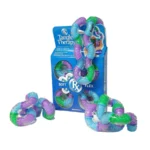
- Let a child have something in his hands when he needs to concentrate, for example a Tangle.
- Have your child look for objects in a “sensory bin” (for example, in a bowl of rice or macaroni)
- Let your child experiment with putty, slime and messy play, let a child feel various materials (feel circles or feel memory)
-
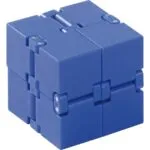
Infinity Cube€ 7,99 -
Tangle Therapy€ 21,95
Move:
Restless children, children who cannot sit still. We all know them. Some children need to move if they want to learn something. By the way, it applies to all children that they absorb things more easily if they are taught through movement. Children are not yet ready to sit all day, but sometimes they really have to.
Tips:
- Have your child change position regularly
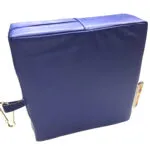
- Try a balance pillow, a balance ball, or a vibrating pillow from Senseez to sit on
- Make room regularly during the day to get some exercise. For example, running, jumping, but also balancing on a balance board and swinging work very well.
-
Senseez Originals€ 59,95
Oral:
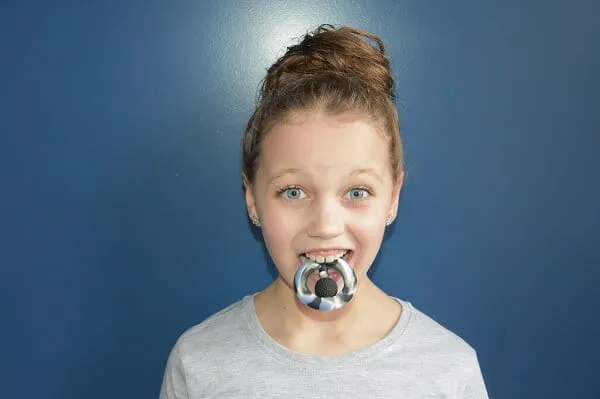
Some children can concentrate better when they have something in their mouth. These children often have chewed-up pencils and pens, wet strings on their sweater and/or wet collars on the jacket.
Tips:
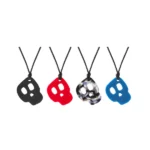
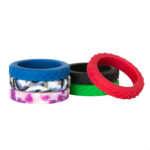
- Give your child a bite necklace or bracelet
- Put a pencil topper on a pencil to chew on
- But also look at your child’s food. With harder snacks you can also partly meet the chewing need.
Smell:
Scents can do a lot for a person. We all know that lavender, for example, relaxes you. The use of scents can also help children very well. Both to relax and to activate.
Tips:

- Use essential oils on, for example, a handkerchief or the cuff of a sleeve
- Make use of scented clay or slime
- Make a scented sachet with a nice scent.
-
Aromatherapy Oil€ 9,99
What is your favorite way to help your child concentrate and what helps you?
You might also like to read
Do you find this article interesting?