How does a stress ball work?
When you squeeze, the muscles in your hand and forearm tense up, and when you let go, they relax again. That repeated movement gives pressure through the muscles and joints (proprioceptive input). Many people find this calming, and it helps to release restlessness without disturbing others. That is why stress balls are widely used by children and adults with ADHD, autism or sensory processing difficulties, but also simply to deal with nerves before a test or during a long meeting.
Which stress ball suits you?
Not every stress ball feels the same. Choose based on the sensation you are looking for:
- Squishy stress balls with a foam filling are light and soft and slowly return to their shape, like the Scrunchems. You will find more of these among our squishy toys.
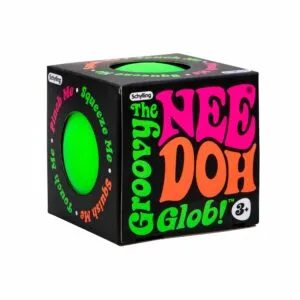
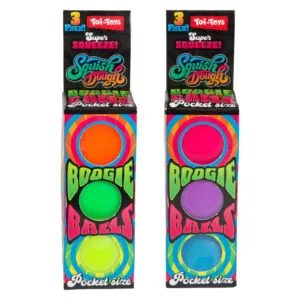
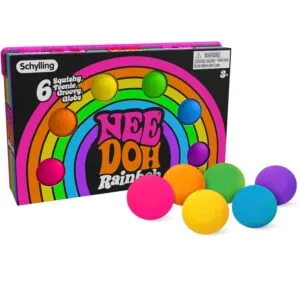
- Dough balls such as the Nee Doh have a thick, dough-like filling that offers more resistance.
- Jelly fidgets such as the Squishy Drop are stretchy and feel smooth and gel-like.
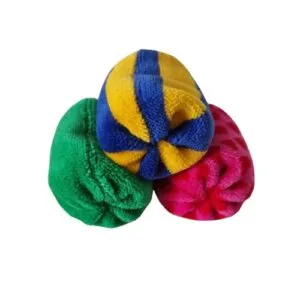
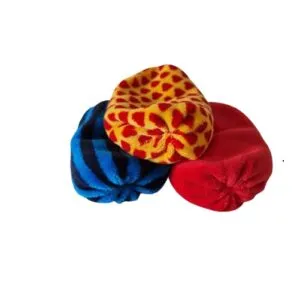
- Fabric stress balls, for example filled with linseed like the Small Friends, are quiet and discreet. Ideal for the classroom or the office.
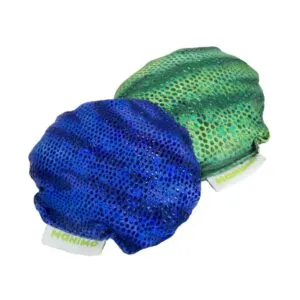
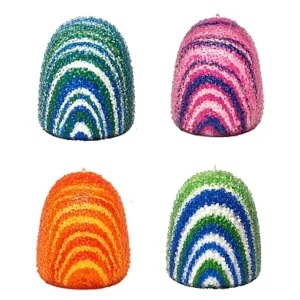
- Stress balls with texture or glitter, such as the Manimo Full Moon, add extra tactile and visual input.
What should you look for?
Start with the size. A small ball of around 5 cm fits easily in a pocket or pencil case, while a ball of 7 to 9 cm sits more firmly in the hand. If the ball will be used in class, choose a quiet, discreet version. If a child likes to chew or bite on things, choose one of our chew products instead, because stress balls are not made for that.
Frequently asked questions
Does a stress ball really help against stress?
A stress ball does not remove the cause of stress, but squeezing and releasing helps many people release tension in the body and refocus afterwards.
Is a stress ball suitable for children with ADHD or autism?
Many children with ADHD or autism benefit from having something to hold. Fidgeting brings calm, which often makes listening and focusing easier.
Can a stress ball be taken to school?
At many schools it can, especially if the ball is small and quiet. If in doubt, check with the teacher. A fabric or soft squishy ball is the least noticeable in class.
From what age is a stress ball suitable?
This varies per stress ball, so always check the product page. For young children who still put a lot in their mouth, a stress ball with a gel or granular filling is less suitable.
What is the difference between a stress ball and a squishy?
A squishy is a type of stress ball with a soft foam filling that slowly springs back. Stress ball is the umbrella term: there are also dough balls, jelly versions and fabric stress balls.