



A child with attention and concentration problems can react impulsively, get distracted easily and show busy behavior. Many parents sometimes wonder: “Is the behavior of my sensitive child due to ADHD, for example, or is there a problem in stimulus processing?
ADHD and stimulus processing problems can occur together. But what can you do when your child is easily distracted and shows busy behavior? Read more about how you can use sensory activities effectively at home here. Read more about offering sensory activities in the classroom here.
When you notice that your stimulus-sensitive child is becoming sad or busy as a result of all the sensory stimuli around him, it is time to take a (sensory) break for your child. See with your child which activity he or she likes to relax with.
For one sensitive child, a rocking movement helps, another child needs to be held tightly (deep pressure) and perhaps your child likes to fidget or read in a quiet place in a lovely beanbag or snoezel room.
Other children become busy when too few sensory stimuli are offered. Sitting still in the classroom for a day is a huge task for these children. Let alone that they get all their tasks done with good concentration. A wigli wobble stool offers a solution for these children.
The good news is that there are strategies and activities that appeal to the various senses. When you offer your child more challenging sensory activities, chances are that your child will be able to concentrate better and therefore be calmer. The following activities work best when there is a good plan and a good reward system already in place.
Think of swinging or swinging [watch the therapy swing], this activity has a positive effect on overactive brains. As your child sways back and forth, his sensory nervous system perceives and integrates movement.
Exercise has a calming effect on the brain. It’s not for nothing that children enjoy swinging so much (and so do we!).
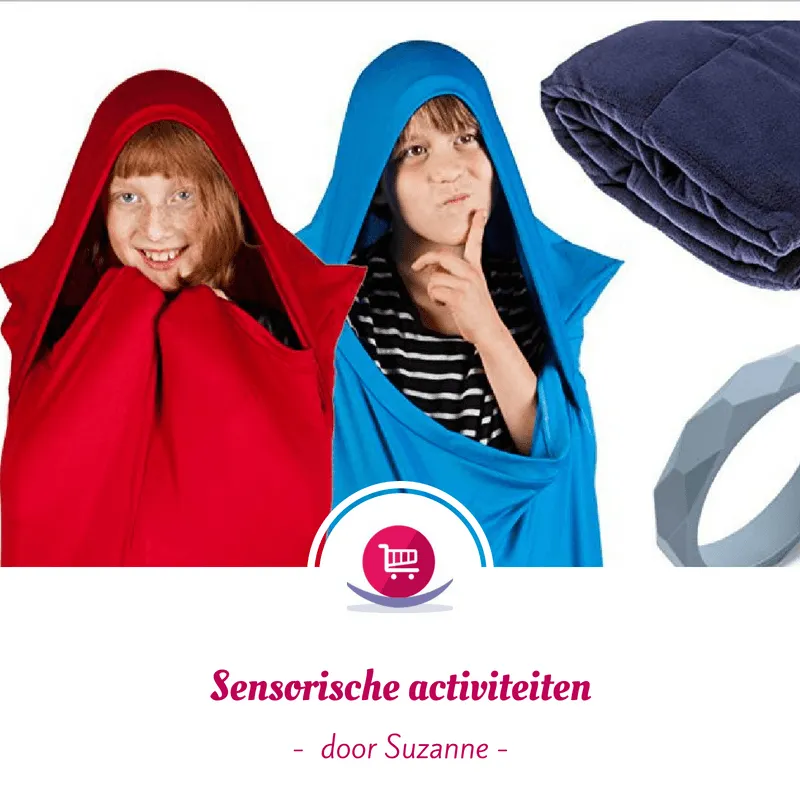
I prefer “active” or “heavy work” swings, because the child really has to work to move his body to increase the movement. The well-known body sox and snuggle huggle are also experienced by many children as pleasant to look for resistance stimuli. These elastic cloths challenge your child to move.
After a long, tiring day at school, many children need a quiet place to unwind and relax. Create a Snoezel spot in the corner of a room. Use a large beanbag and loose cushions where your child can hang out. Offer some relaxing visual stimuli in the room, such as relaxing scents, a lava lamp or visual hourglass , and soft, soothing lighting and music.
Also consider a projector. Offer your child a weighted blanket or weighted cuddly toy to put over him, for an extra calming effect. For children who are easily overstimulated, experience tension and anxiety, a pressure vest is definitely recommended.
Collect chairs, ottomans, hoops, cushions and, for example, cones. Place all items indoors on the floor or outside in the garden at a small distance from each other. Create a course where your child has to climb over things, pass under them, jump and, for example, hopscotch for 10 minutes.
Put on some music to make the activity even more fun. Getting your child to focus on balance and coordination skills gives the brain a great workout.
TIP: Use the move die. On each side you can add a card with a move command. Handy for use in between and as a break moment in the classroom.
For therapists and schools, we have a section on our website with various materials for a (tactile) trail, such as the tactile path.
Working on hand-eye coordination is fantastic for connecting the body and brain. Use a tennis ball or a beach ball to throw over with each other. [If your child finds a ball difficult to catch, use this rubber ball].
This activity improves your sensitive child’s focus and organizational skills. A good variation is to have your child throw with the right hand and learn to catch with the left hand. And a little later he switches hands. A ping pong table can also accommodate perfectly and helps children to focus.
Fill a box with various sensory materials. Think of a weighted rag (or cuddly toy), a soft stress ball, a Tangle (or other fidget toys), a visual hourglass, putty (or aromatheraputty), little iQ puzzles and other fun things you can think of that can help your sensitive child calm down.
Let your child use the products from the sensory box before, during or after homework. Moving, touching and fidgeting contribute to better focus.
Young children can often regulate their alertness through the mouth. It is not for nothing that a thumb or pacifier can help your child relax. So take advantage of this.
When your child comes home from school, give them a crunchy snack that gets the jaw muscles working. Carrot, bell pepper or celery pieces but also apple slices work well. Sipping a drink with a straw, playing a blowing game or blowing bubbles help activate the brain. A vibrating toothbrush also works wonders.
And chew jewelry also offers a good alternative, provided your child also feels the need to chew on strings, pencils, clothing or hair.
Children with attention and concentration problems respond well to variation. Try one activity first, then switch to another one.
Observe your sensitive child to see which activities best help your child to calm down after returning home from school.