



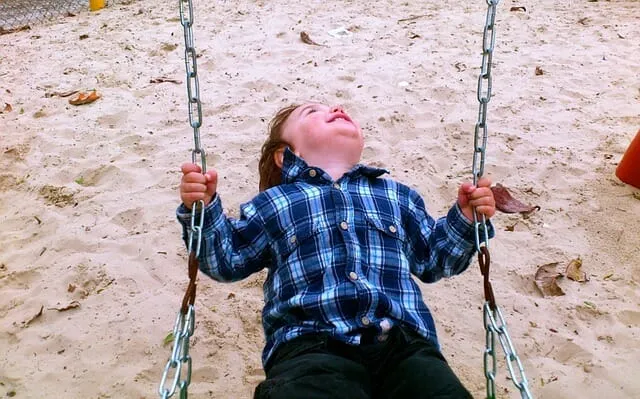
My children prefer to hang upside down on the couch all the time. They literally hang out there, watching TV, talking to each other. I prefer to talk to them every time to sit up again. But did you know that hanging upside down has sensory benefits? And that vestibular activities are an ideal way to process stimuli?
Hanging upside down can certainly be used effectively to stimulate stimulus processing, it can actually help to calm down children with stimulus processing problems . Read the benefits here.
Vestibular activities that involve hanging upside down are most effective when done for short periods of time throughout the day.
For example, you can take a sensory break every two hours every day where your child can look for sensory stimuli such as hanging upside down. Think of hanging upside down on the swing, on a horizontal bar, hanging on the couch, or down the slide. This only needs to take 5 minutes.
Although there are risks associated with hanging upside down for an extended period of time, children in general can hang upside down as often as they want. Your child will indicate when hanging upside down is uncomfortable and then of course you stop the vestibular activities.
There are many different ways for your child to play upside down, here are some suggestions:
Hanging upside down is not the only thing that stimulates the vestibular system and helps it process stimuli. Other activities that can be used are:
But actually, any activity that has to do with moving your body is sufficient, especially moving your head. Are you wondering if your child has problems processing stimuli? Then read our Signals of disturbed stimulus processing here.
Of course I am curious which activity is your kids’ favorite!
Share this post via social media